
Putting Down Roots
Wrestling with the Tension of 'Now and Not Yet'

Rich was working, so I toured the house alone. It was unlike any of the other (rather disappointing) homes we had looked at to that point and I immediately fell in love with its open concept, two story Great Room, and unique footprint. There was so much space! (compared to our then-current 800 square foot two bedroom). The previous owner was also a gardener and had lovingly cultivated flower beds around the house and throughout the 3/4-acre property. Enjoying a few strawberries picked right from the garden, the agent and I took in the surrounding Dogwoods, Tulip trees, Redbuds, and Magnolias. It also boasted a two-car garage—something I had never owned.
It was perfect.
“Honey. You’ve got to come see this house. I want this house,” I whispered emphatically into the phone.
I remember standing together in the loft area outside the master bedroom an hour later, looking at the Great Room below. We were imagining Christmas decorations, future children, and Thanksgivings when he said, “Let’s grow old here.”
Eleven years later, we decided to sell it.
Although we did not “grow old” there, we did, in many ways, grow up there. Through many unexpected deserts in that time, the Lord shaped our marriage, the way we parented, how we handled finances, and drew us into a closer walk with Him.
We had decided to take on the venture of building. We were finally in a good position financially —as well as spiritually— but with the blank canvas of a custom home build, I remember praying that God would help me reign in my desires for bigger and more. Rich suggested I scour Instagram for inspiration, and that’s when temptation really began to rear its ugly head.
Displaced Identity
Since the discovery of minimalism —also known as “intentional living”—a few years before selling that first “dream home,” I have lived with the constant tension of wanting to live in a beautiful home with beautiful surroundings and feeling guilty for desiring more than is necessary.
Minimalism initially attracted me because, at the time, I was drowning in clutter. We had accumulated so many things and rather than sell or donate the excess, I took to creating elaborate systems of organization for it all. Excess seems to have become some kind of American status symbol, and I had grown weary of it.
As I let go of hundreds of material possessions in the span of a few weeks, I learned a few interesting things about myself. The first thing I realized is how intertwined my sense of identity had become with these things. They had become signposts for accomplishments, interests, and my place in the world. The number and value of certain objects pointed to worldly success. Many held reminders of times gone by and who I had been at various stages of life—daughter, teacher, mother, athlete (and dozens more). I realized that I had allowed plastic, fabric, metal, and stone to displace my true identity as a child of God. This realization was the catalyst to jettisoning hundreds—maybe thousands—of possessions.
I began to see decor as unnecessary and a burden to clean around. I left tables and countertops empty and shelves bare. I stopped buying things on impulse. I stopped buying things to fit in. I stopped buying things to fill a void (in the room and in my heart).
And this worked for me, for a time. A reset for my thinking.
But then we decided to build. And I started following others who were building. And I saw how beautifully they decorated their homes and how inviting they looked. And I thought back on those years I first embraced minimalism, and I realized that yes, our home was easier to clean, but it also didn’t feel very warm or inviting. So, I began to beautify our new home, but this time with the intention of creating a space ready to welcome and receive others with warmth and care.
And yet, with each new beautification project, I feel the tension of “Is this really necessary?” I’ve been wrestling with it actually.
Putting Down Roots
Spring is in full bloom, and I finally found time to uncover the patio furniture and sweep off the porch. While driving to the garden center, that familiar tension rose. Flowers can get expensive. “Are they really necessary?” I asked. Probably not, but flowers bring me such joy, and they speak of life and invitation.
Back home, I gently pulled an ornamental grass from its nursery pot, and noticed its thick, long roots spider-webbing their way through the dirt. “Wow. You guys really put down roots,” I mused.
I learned a long time ago, that a plant which is left to grow in its nursery pot for too long will become “root bound.” After you pull the plant from its plastic cage, you can see its roots wrapping round and round in a thick circle near the bottom. If you don’t dislodge those roots by gently pulling them from their spiral and perhaps taking a sharp spade along the sides, they will continue to grow that way even when transplanted into a bigger container.
Breaking up the roots will encourage the plant to embrace its new environment. Once freed from their cramped quarters, roots will explore more deeply and thus create a stronger plant.
In that moment, a story from Scripture materialized in my mind.
Thriving in Exile
King Nebuchadnezzar had conquered Judah and carried many Israelites into Babylonian exile. In essence, they had been transplanted. But instead of continuing to grow their established roots concentrically (withering and weakening), the Lord encouraged them to embrace their new home.
Through His prophet, Jeremiah, the Lord told His people:
“Build houses and live in them; plant gardens and eat their produce. Take wives and have sons and daughters; take wives for your sons, and give your daughters in marriage, that they may bear sons and daughters; multiply there, and do not decrease. But seek the welfare of the city where I have sent you into exile, and pray to the Lord on its behalf, for in its welfare you will find your welfare.”
(Jeremiah 29:5-7)
Despite the claims of false prophet Hananiah, they would remain in Babylon for 70 years (not two, as Hananiah insisted). For many, this would mean living their final days in Babylon. (“Our days may come to seventy years, or eighty, if our strength endures” Psalm 90:10) And we know from Ezra 1 that not everyone returned to Jerusalem when King Cyrus made the decree which allowed them to. Some stayed.
Build houses. Plant gardens. Have children and grandchildren. God was telling them to “settle in, you’re going to be here awhile.” To not just survive, but to thrive.
And interestingly, God also told them to seek the welfare of their new city (peace and prosperity in the NIV). To pray for its wellbeing. For in the wellbeing of Babylon, they would find wellbeing for themselves.
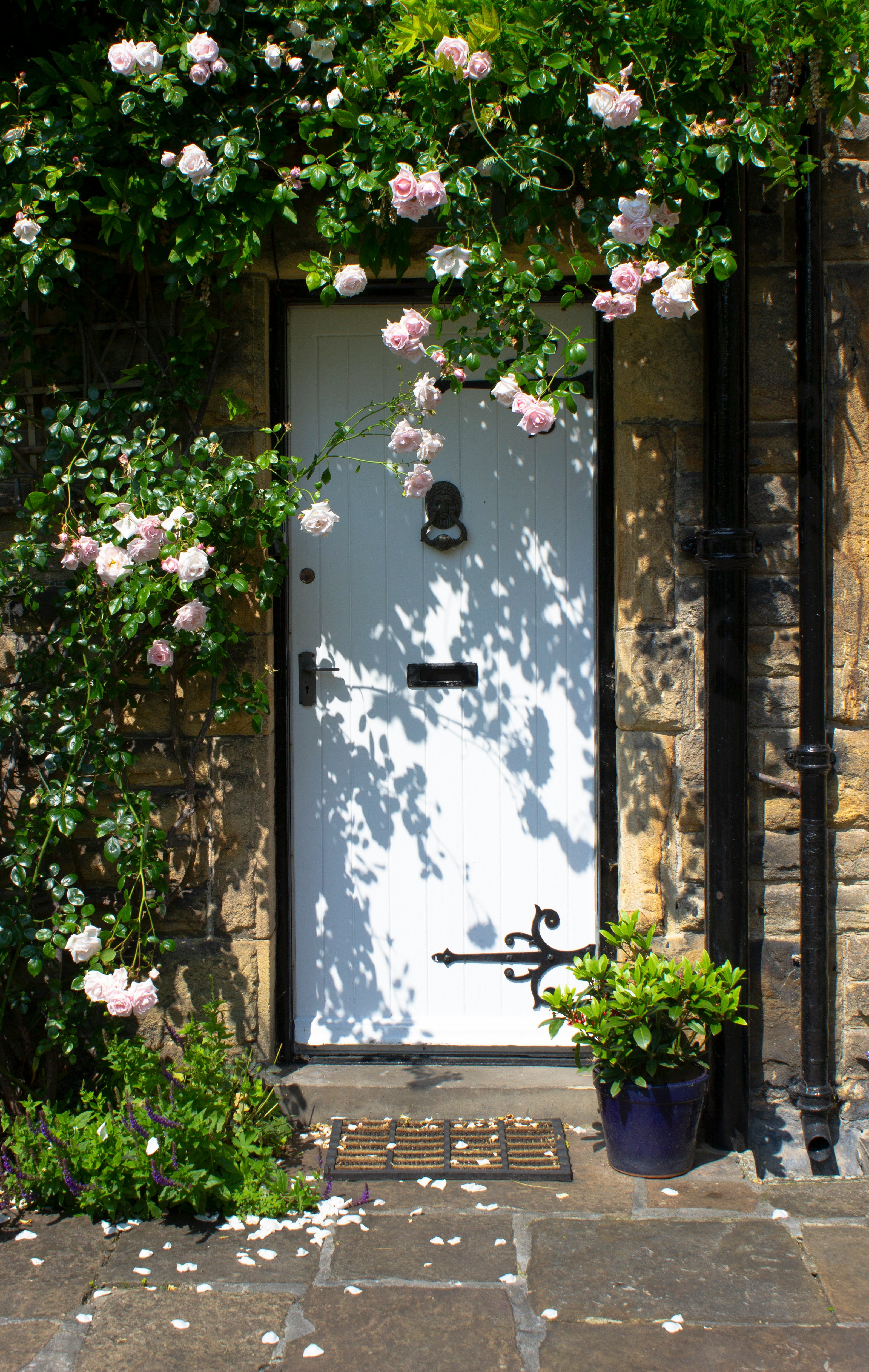
Leaving Behind Gardens
I’m reminded of Psalm 84 where the psalmist longs to enter the heavenly courts of God. He sings of pilgrims with hearts set on Zion who must first travel through the “Valley of Baca.”1
This is the only place in the Bible this valley is mentioned. It might be an actual valley, or it could be a play on words. “The Hebrew word baca is related to bakah, which means “to weep.” Baca refers to a type of “weeping” tree; that is, one that drips resin or gum-like tears, such as a balsam, mulberry, or aspen tree. The name of the valley indicates a dry, arid region since this is where these types of weeping trees tend to grow.” (gotquestions.org)
Whether literal or symbolic, the psalmist uses “the Valley of Baca” to illustrate the difficult and sorrow filled journey we make en route to Heaven.
But notice what is left behind once the pilgrims pass through: “As they go through the Valley of Baca they make it a place of springs.” I love the way songwriter Caroline Cobb recreates this verse in her song “No Place Better” based on Psalm 84:
“We will go from strength to strength
Even in the wilderness
You are turning tears to desert springs
Leaving gardens in our footsteps”2
When I picture a garden, I picture vibrant life! Colors, fragrance, food, birds and bees and butterflies. The picture the psalmist is painting is one of transformation—for the traveler as well as the path. As we journey through this home—however temporary, however difficult—our lives should leave it better than we found it. And we can do this in the strength and joy of the Lord as we advance toward Heaven. (“for the joy of the Lord is your strength.” Nehemiah 8:10)
Good Exercise
I think it’s good that I wrestle with the tension of wanting to create a beautiful space here in my temporary home and wanting to be sure my eternal hope and treasure is the Lord. The tension between the now and not yet. I believe the two can co-exist with mindful care. It’s important to impose periodic “heart checks” and consider the “why” behind our decisions—especially when they involve our temporary residence.
Before we reach Zion, we must first live here as exiles. But not simply surviving—pining and wasting away for the courts of the Lord. Although there will be “no place better” than Heaven, He has given us purpose and work to do in this place.
As we go from “strength to strength,” creating beauty where He has planted us, we have the privilege of offering a small glimpse of Heaven to all who enter and pass through on their way.
May we build our houses, plant our gardens, have children and grandchildren while in exile with hearts and hopes firmly rooted in our identity as God’s children and future heirs.3 May our home and lives be an outward expression of an inward belief:
that God Himself is beautiful, and His character is worthy of being mirrored in all we do for the benefit of all we meet.
“Blessed are those whose strength is in you,
in whose heart are the highways to Zion.
As they go through the Valley of Baca
they make it a place of springs;
the early rain also covers it with pools.
They go from strength to strength;
each one appears before God in Zion.” (Psalm 84:5-7)
Verse 6 in the New Living Translation reads:
“When they walk through the Valley of Weeping,
it will become a place of refreshing springs.
The autumn rains will clothe it with blessings.”
(Psalm 84:6) NLT
Caroline Cobb. “Psalms: The Poetry of Prayer” Track 2: No Place Better, 2023.
Listen here
“…we are God’s children. Now if we are children, then we are heirs—heirs of God and co-heirs with Christ, if indeed we share in His sufferings in order that we may also share in His glory.” (Romans 8:16-17)
Loved this one, Vanessa. So eloquently wqritten straight ftom your beautiful heaer! ❤️
Looked for your April wrap up but I cpuldn't find it.🤷♀️