
Birth Pains
How Suffering Brings Forth New Life in Unexpected Ways

Seasons currently abound. Christians are in the Advent Season, while the world outside the church enjoys the holiday season. Many partake in the hustle and bustle of the shopping season. Here in Western PA, we’re enduring the frigid temps of the winter season.
However pleasant (or not) they may be, I’ve learned seasons are not the destination, but rather a means to an end, a period of preparation for that which the season’s conclusion brings. The Advent Season concludes with the birth of Jesus. The holiday season ends after we ring in the New Year. And the winter season closes—at least for me—when I spot the first red-breasted robin plucking worms from softening soil.
But ‘seasons’ can apply figuratively as well. We, like nature, experience seasons of change, renewal, flourishing, and difficulty. Life has taught me that it is often in the challenging seasons the Lord is shaping my spirit for something that lies ahead. Without realizing it at the time, I am in a ‘season of preparation.’
According to Bible Hub’s Timeline, some three thousand years (or more) passed between The Fall and Christ’s birth. Four hundred of those latter years were lived in relative silence from God. That is a long season of preparation. Like ancient Israel, Christians are also in what feels like an extended period of waiting while we eagerly watch for our Savior’s return. I envision long stretches of time like this open space for God to create something new!
Two thousand years ago, that something new was Emmanuel. It’s astonishing that God not only became human in order to live and dwell among us but that He did so first as a baby. A baby conceived. A baby that grew and developed in His mother’s womb. A baby born.
Soon after Gabriel announced to Mary the coming of a son, he explained another miraculous baby due within three months to Mary’s older cousin, Elizabeth. Scripture says, “At that time Mary got ready and hurried” to visit Elizabeth and stayed with her “about three months and then returned home.” (Luke 1:39; 56)
I imagine Mary helping her cousin prepare for her baby’s arrival, offering emotional and spiritual support, and bonding over their unique circumstances. I imagine Elizabeth would have offered Mary much needed companionship and bolstering of faith as well. Here, we see a picture of the Titus 2 woman ministering godly wisdom and training to the younger. Both women glorifying God by serving one another with the gift of fellowship.
I imagine both women coming out of this months-long season feeling encouraged and secure in their calling, ready to fully embrace their new roles.
Regarding the actual birth of Jesus, Scripture offers only one verse; “and she gave birth to her firstborn, a son.” (Luke 2:7) Memories of the birth of my own firstborn son take me back to the flood of emotion that day brought. The anticipation. The fear. The pain. And the joy. I remember the months of preparation beforehand and the ways becoming a mother changed me (and continues to change me). Reflecting on the miracle of birth in general fills my mind with an overwhelming sense of awe.
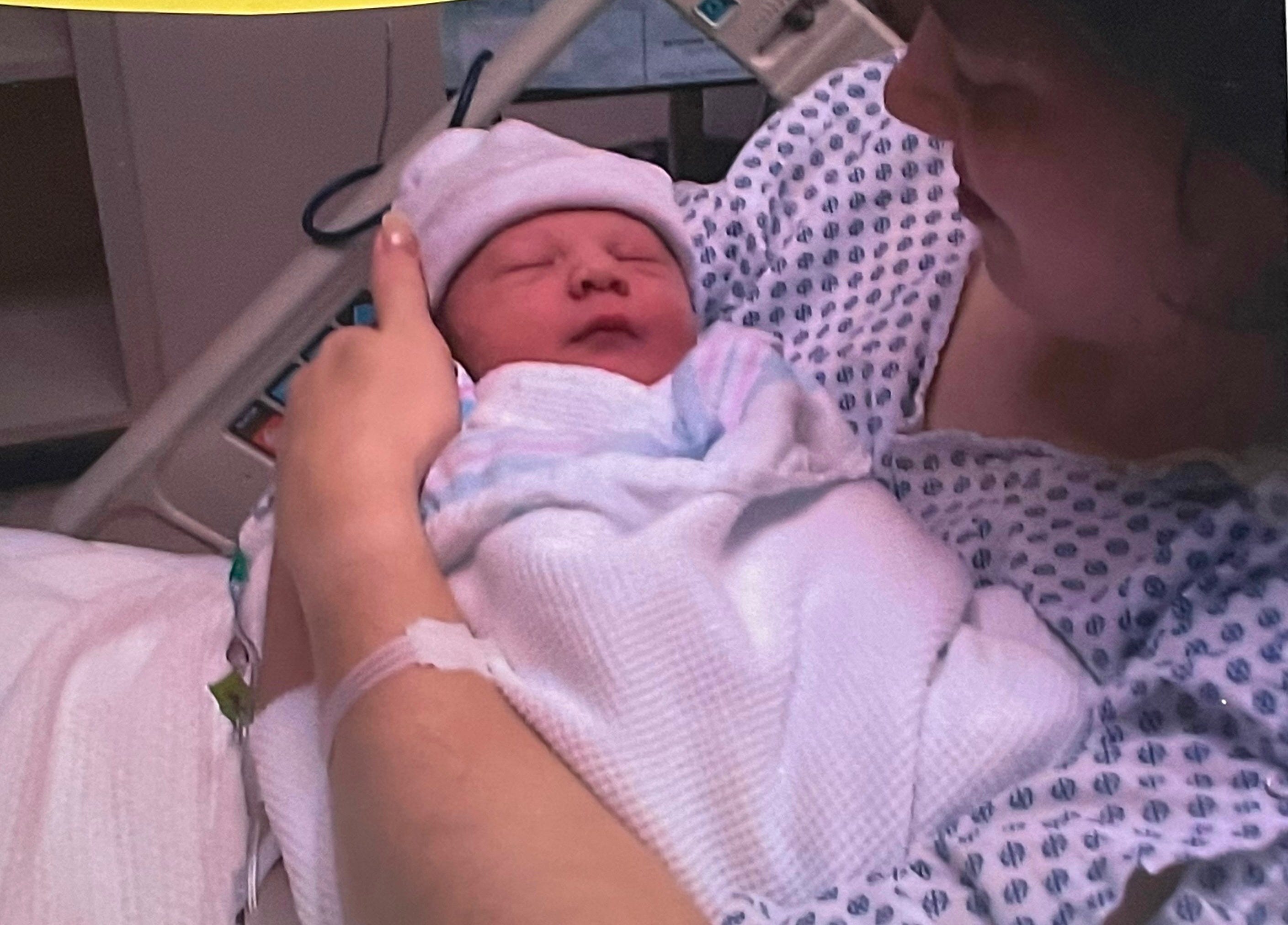
Before Eve experienced the blessing of her firstborn, the Lord foretold how her sinful choice would affect childbirth; “I will greatly increase your pains in childbearing; with pain you will give birth to children.” (Gen 3:16)
It’s remarkable how often the Lord used the concept of painful childbearing in figurative ways to illustrate Redemptive history in both the Old and New Testaments. When examined, we see a pattern of suffering, transformation, and hope.
This metaphor appears twice in the Gospels and both times point to a period of painful sorrow that looks forward to intense joy. It is this ‘looking forward’ to His return that bolsters hope through tribulation.
The first time Jesus uses this metaphor is in the Olivet Discourse. He says, “All these are the beginning of birth pains.” (Matthew 24:8) “All these” include false messiahs, wars and rumors of wars, kingdoms and nations rising up against one another, and famines and earthquakes in various places.
He wanted His disciples to understand a season of great trial and suffering will take place before His return, and like the labor before delivery, these things must take place beforehand. Further, just as labor intensifies as the woman’s body prepares for birth, Jesus tells us persecution, martyrdom, lawlessness, and lovelessness will increase before ‘the end’ as well.1
This news would be disheartening if not for the promise of His return at the end of it. Jesus again uses the concept of painful childbirth to help his followers better understand the hope that awaits believers. In John 16 He says,
“I tell you the truth, you will weep and mourn while the world rejoices. You will grieve, but your grief will turn to joy. A woman giving birth to a child has pain because her time has come; but when her baby is born she forgets the anguish because of her joy that a child is born into the world.” (vv 20-21)
Paul elaborates on this temporary pain in Second Corinthians 4 when he says,
“That is why we never give up. Though our bodies are dying, our spirits are being renewed every day. For our present troubles are small and won’t last very long. Yet they produce for us a glory that vastly outweighs them and will last forever! So we don’t look at the troubles we can see now; rather, we fix our gaze on things that cannot be seen. For the things we see now will soon be gone, but the things we cannot see will last forever.” (vv 16-18 NLT)2
Painful childbirth can serve as a metaphor for all believers in these ‘last days.’ A challenging and often difficult season that is nevertheless shaping and growing us in preparation for what’s to come. When our Lord returns, the pain will end, and He will usher in paramount joy. A glorious joy that in light of all we’ve experienced here will be considered ‘light and momentary.’ This season, however difficult, is part of a larger transformational process which will culminate in Christ’s triumphant return.
In the howling winter wind, I hear the groans of creation. For it is not only humankind who longs for the Son of Man to return and ‘make all things new,’ but all of God’s created world. Again, this painful period is likened to that of childbirth in Romans 8 where Paul says,
“For we know that all creation has been groaning as in the pains of childbirth right up to the present time. And we believers also groan, even though we have the Holy Spirit within us as a foretaste of future glory, for we long for our bodies to be released from sin and suffering.” (vv 22-23 NLT)
There will be ultimate restoration when Christ returns!
When I think of childbirth I think of pain and suffering, yes, but I also cherish the reason for the pain—the bringing forth of new life. There is inherent sacrifice, but in the sacrifice, much fruit is gained. And for them I would go through it all again.
In eternity past, when the Godhead agreed to this plan of Redemption, Jesus knew what torment lie ahead. But for ‘the joy set before Him, He endured the cross.’ (Heb 12:2)
While contemplating the birth pains that brought forth the life of Jesus, I could not help but also consider the agony Jesus endured in order to bring forth the life of His Bride—the Church.
Just as Jesus, the Son of God, stepped into time in an unexpected, surprising way—as a newborn—so we also are given new birth in an unexpected, surprising way.
Charles Wesley captures this marvelous truth in his famous hymn, “Hark! the Herald Angels Sing.” May we worship and adore our King just as the angels did all those years ago:
“Mild he lays his glory by,
born that man no more may die,
born to raise the sons of earth,
born to give us second birth.
Hark! the herald angels sing,
“Glory to the newborn King!”
2 Corinthians 4 is one of my most favorite chapters in the whole of Scripture. It gives me so much hope! It provides wonderful perspective that strengthens my endurance to persevere through trials. Eyes on Jesus! It was hard to choose which translation to use for verses 16-18 above. While the NLT isn’t quite as poetic as more ‘word for word’ translations like the ESV or NKJV, the NLT speaks right to the heart of the matter in contemporary language. I recommend reading it any time you need a ‘vision adjustment.’
Wonderful summation of the miracle of childbirth reflecting God’s own redemptive story for His people!